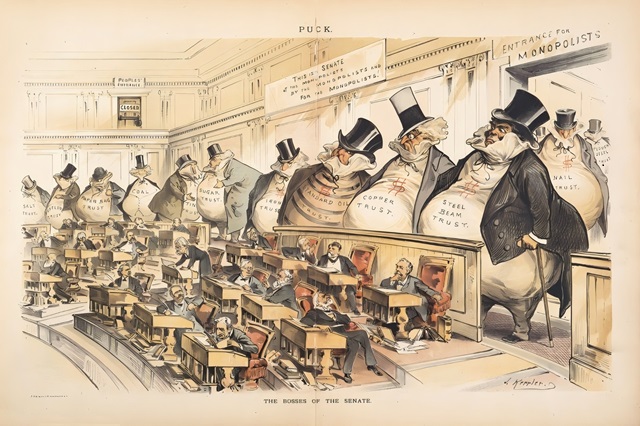
Cross-Border Antitrust Compliance: Risk Prevention and Fair Competition Governance for Global Enterprises

law enforcement, enterprises engaged in cross-border operations, transnational mergers and
acquisitions, and global market expansion face escalating risks inantitrust compliance, fair
competition maintenance, and cross-border transaction supervision.
This article examines the core regulatory frameworks governing cross-border antitrust activities in
major jurisdictions, including the EU’s Digital Markets Act (DMA), the U.S. Sherman Antitrust Act,
and relevant global competition rules, and outlines systematic compliance strategies to mitigate legal
and operational risks through professional antitrust legal counsel and internal governance optimization.
Cross-border antitrust compliance operates within a stringent regulatory ecosystem dominated by
the European Commission (EC) and the U.S. Department of Justice (DOJ), with coordinated oversight
from competition authorities of various countries. For enterprises conducting global business, compliance
begins with adherence to core antitrust laws and regulations, notably the U.S. Sherman Antitrust
Act of 1890, the EU’s Digital Markets Act (DMA), and relevant competition rules in major economies.
These regulations prohibit horizontal monopoly agreements (such as price-fixing and market division
among competitors), vertical restrictive practices (such as resale price maintenance and exclusive
dealing), and abuse of market dominance (such as predatory pricing and self-preferencing), with
strict penalties for violations.
A critical compliance pillar is anti-cartel and anti-collusion governance, enforced by stringent
regulations in major jurisdictions. Enterprises must establish robust internal control systems to prevent
confidential information exchange, price coordination, and market allocation agreements among
competitors. Non-compliance may trigger dawn raids by competition authorities, substantial fines (up to
10% of global annual turnover), criminal prosecutions for serious cases, and severe reputational damage.
For example, in 2023, the U.S. DOJ prosecuted an asphalt contractor executive for attempted monopolization
in violation of Section 2 of the Sherman Act, resulting in home detention, probation, and fines.
Parallel to anti-cartel rules, cross-border merger control compliance presents substantial challenges.
The EU Merger Regulation, the U.S. Hart-Scott-Rodino (HSR) Act, and competition rules of other jurisdictions
mandate pre-transaction notification for mergers and acquisitions that meet specific market share or turnover
thresholds. These rules require enterprises to submit detailed filings on market structure, competitive impact,
and remedy commitments, with strict prohibitions on “gun-jumping” (completing transactions before
obtaining regulatory approval). The European Commission reserves the right to prohibit mergers that may
eliminate or restrict competition if no adequate remedies are proposed.
Digital platform antitrust compliance further complicates cross-border operations. The EU’s DMA,
which became largely applicable in May 2023, targets “gatekeeper” platforms (such as Alphabet, Amazon,
and Meta) and imposes strict obligations, including prohibiting self-preferencing, restricting data combination
from different services, and ensuring data interoperability and software removability. Enterprises operating
digital platforms must navigate evolving rules on algorithmic collusion, data monopoly, and platform
ecosystem governance to avoid regulatory sanctions, which can reach up to 10% of global turnover for
non-compliance.
Proactive antitrust compliance governance requires a risk-based, multi-jurisdictional approach. Specialized
antitrust legal counsel can assist enterprises in developing tailored compliance programs, conducting
pre-transaction antitrust risk assessments, establishing internal reporting and monitoring mechanisms,
and preparing for regulatory investigations and dawn raids. By embedding antitrust compliance into
corporate strategy and daily operations, enterprises can enhance regulatory resilience, safeguard market
access, and protect shareholder value in the global competitive landscape.
Hyperlink List:
●EU, Digital Markets Act (DMA) (https://eur-lex.europa.eu/eli/reg/2022/1925/oj)
●U.S. DOJ, Sherman Antitrust Act (https://www.justice.gov/atr/sherman-act-background)
●EU Commission, Merger Procedures (https://competition-policy.ec.europa.eu/mergers/procedures_en)
This article is for reference only and does not constitute tax or legal advice. All interpretations and operations shall be subject to the latest official regulations of relevant overseas competent authorities.